Mullite block mix formulation test campaign
The calciner prototype needed seven custom high-temp blocks, comfortable a good bit hotter than the 2000c target. Mostly mullite, with silicon carbide and calcium aluminate added to improve properties. While those would improve thermal properties needed, structural performance would be diminished. How diminished? Where's the sweet spot? Run some test and find out.
Working with Dawson, senior engineer, I devised a plan to cast small test tiles in silicone ice cube trays. Every component we needed was on hand or in the building within 24 hours. Dawson designed and built the compression test rig.
Plan
Everything lives on notebook pages. This is how I roll. Notes. Book lives on my desk open to today. Every day gets a new page. Want to know where I am with the day's works, lean over and take a look. Want to know what issues we ran into last Monday or Tuesday? Notes are good. Acquire parts, tools and materials, confirm the mixing tools, sort the cleanup and safety protocol, get the kiln into position, test the kiln. Check boxes are little dopamine pills, or cortisol.
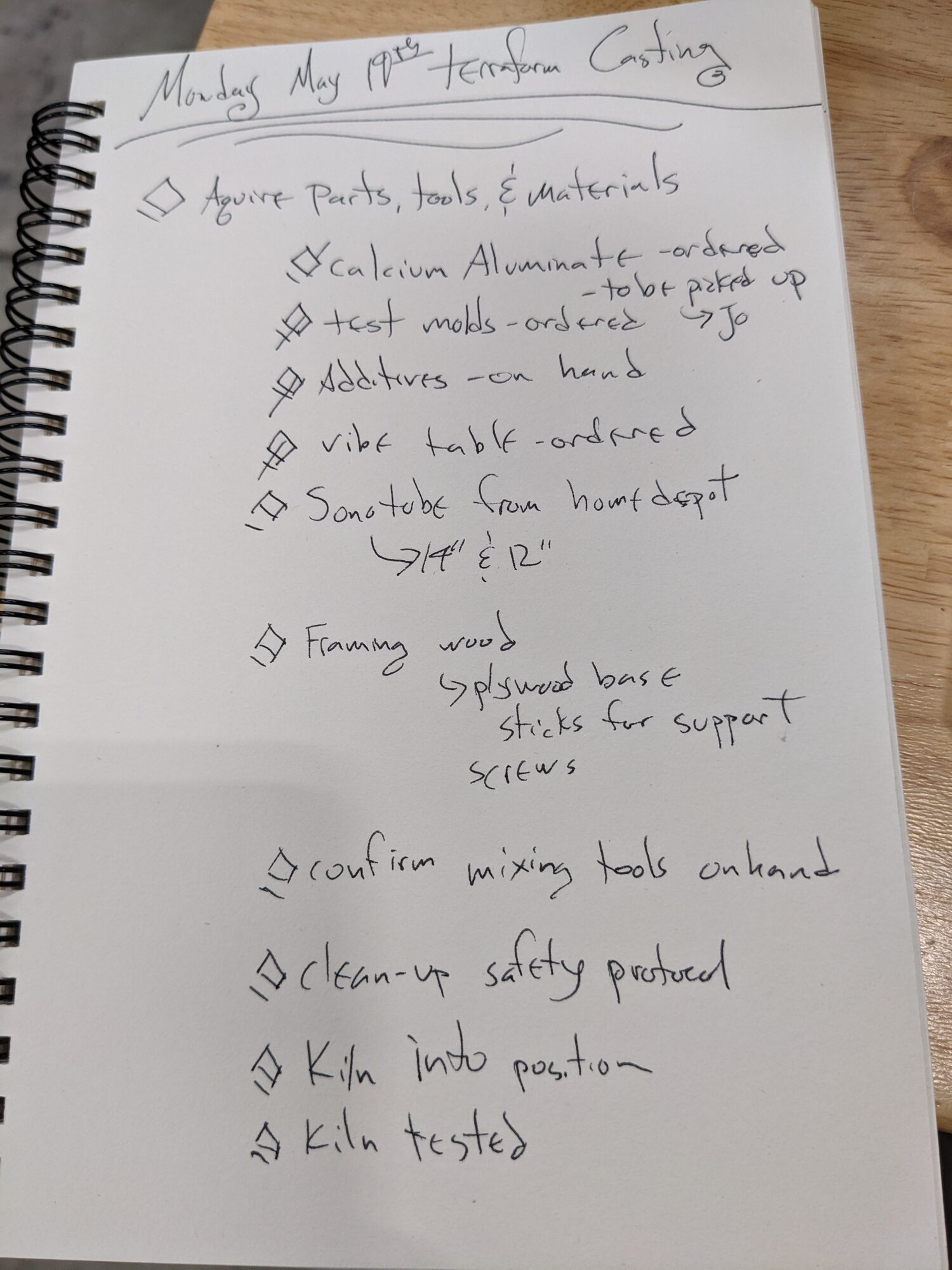
Day one, on paper. Calcium aluminate and test molds ordered, additives on hand, vibe table ordered, sonotube from Home Depot.
Mixes
Two runs of nine tiles. Mullite as the balance, silicon carbide stepped 5 / 10 / 15%, calcium aluminate stepped 7 / 10 / 13% — 60 g of dry powder per tile, 6 g of water.
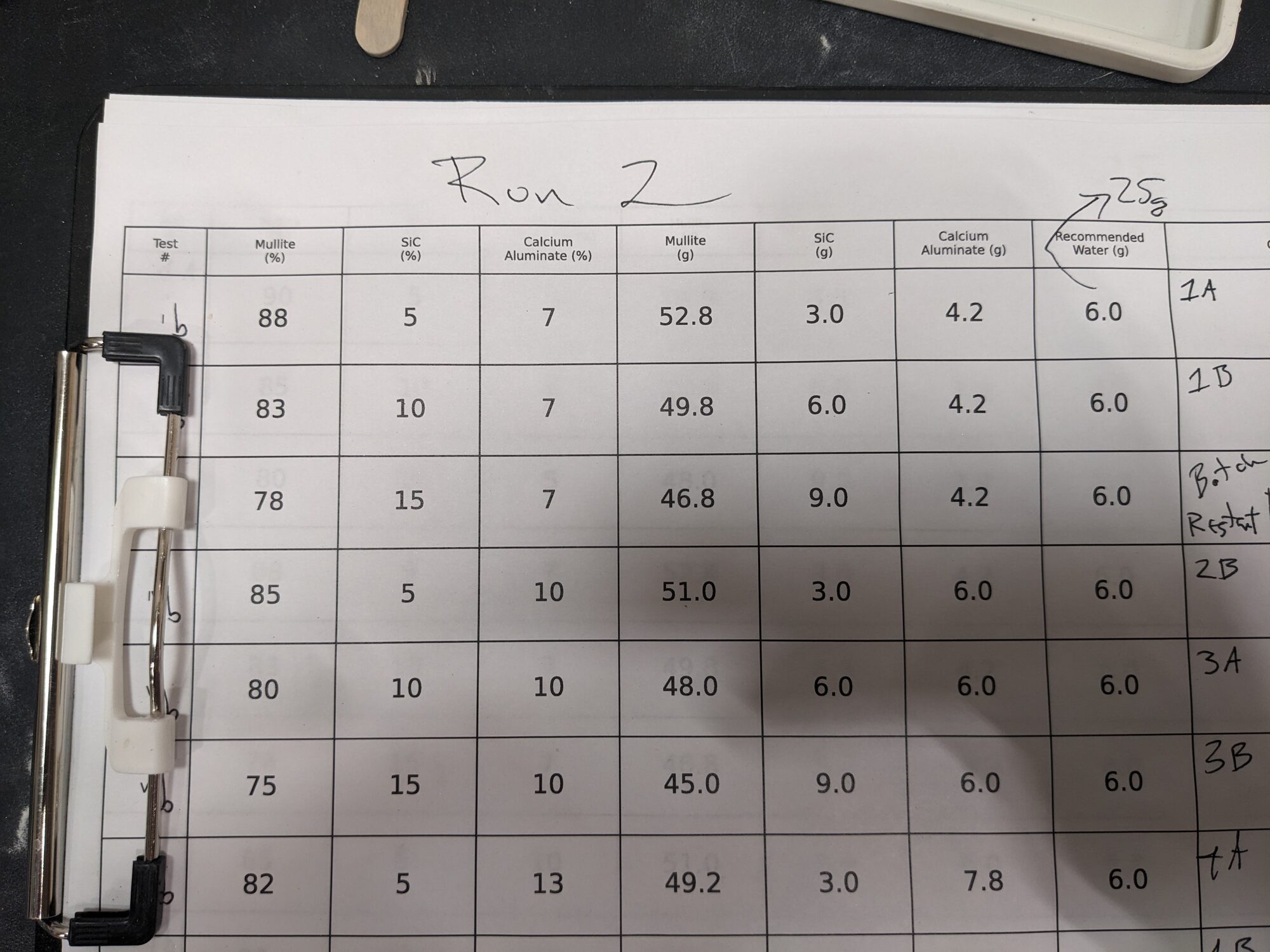
Run 2 batch sheet. One row is marked "batch restart".
Casting
Silicone ice cube trays. Cheap, dimensionally consistent, and they release a green tile without mold-release, but they didn't help with drying - the vented hood did.
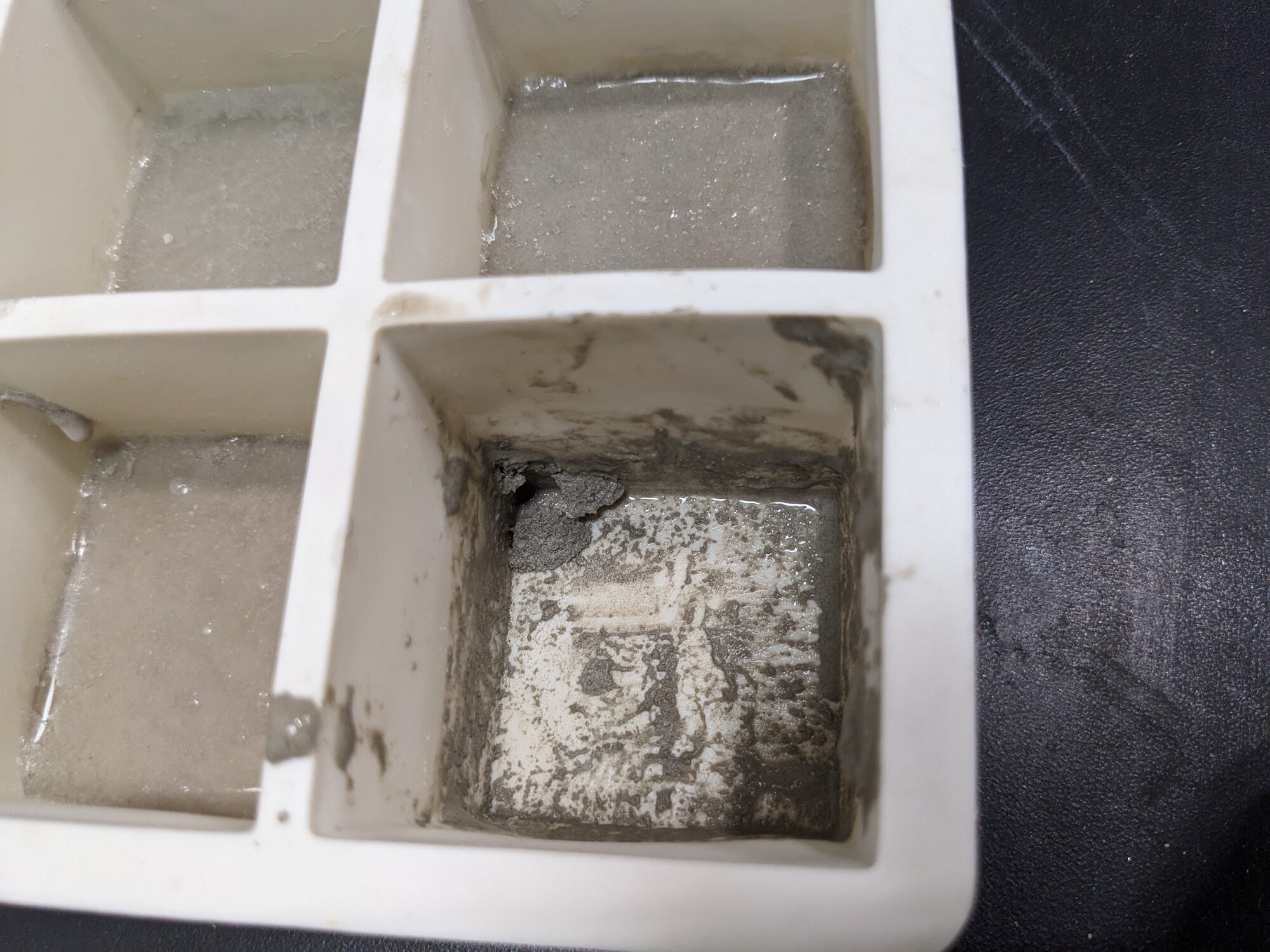
Mix in the tray. One cell shows the surface still wet.
Firing
An electric pottery kiln no one had used or knew how to, but was gathering calcium dust in the corner was serviced and put to task.
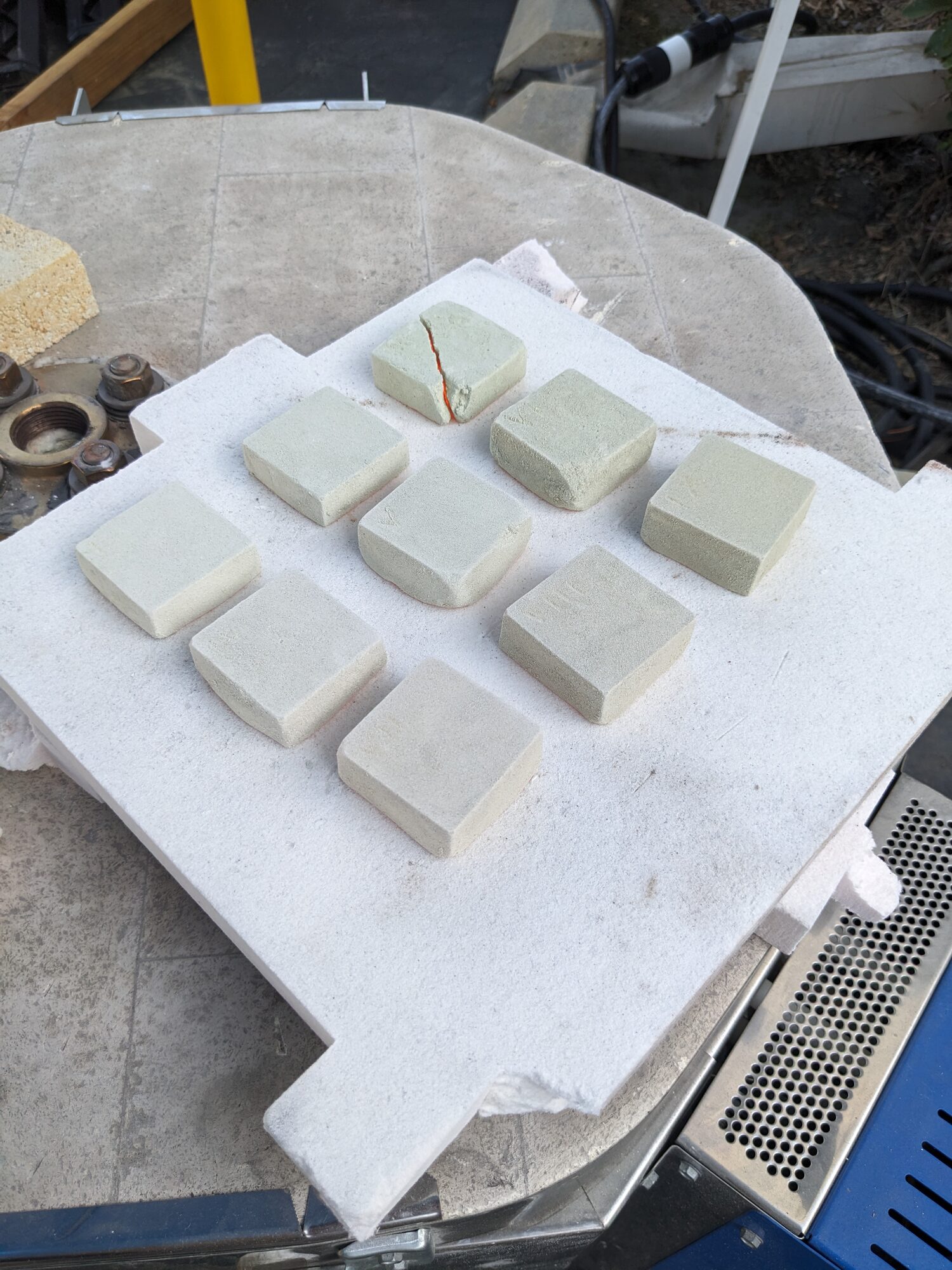
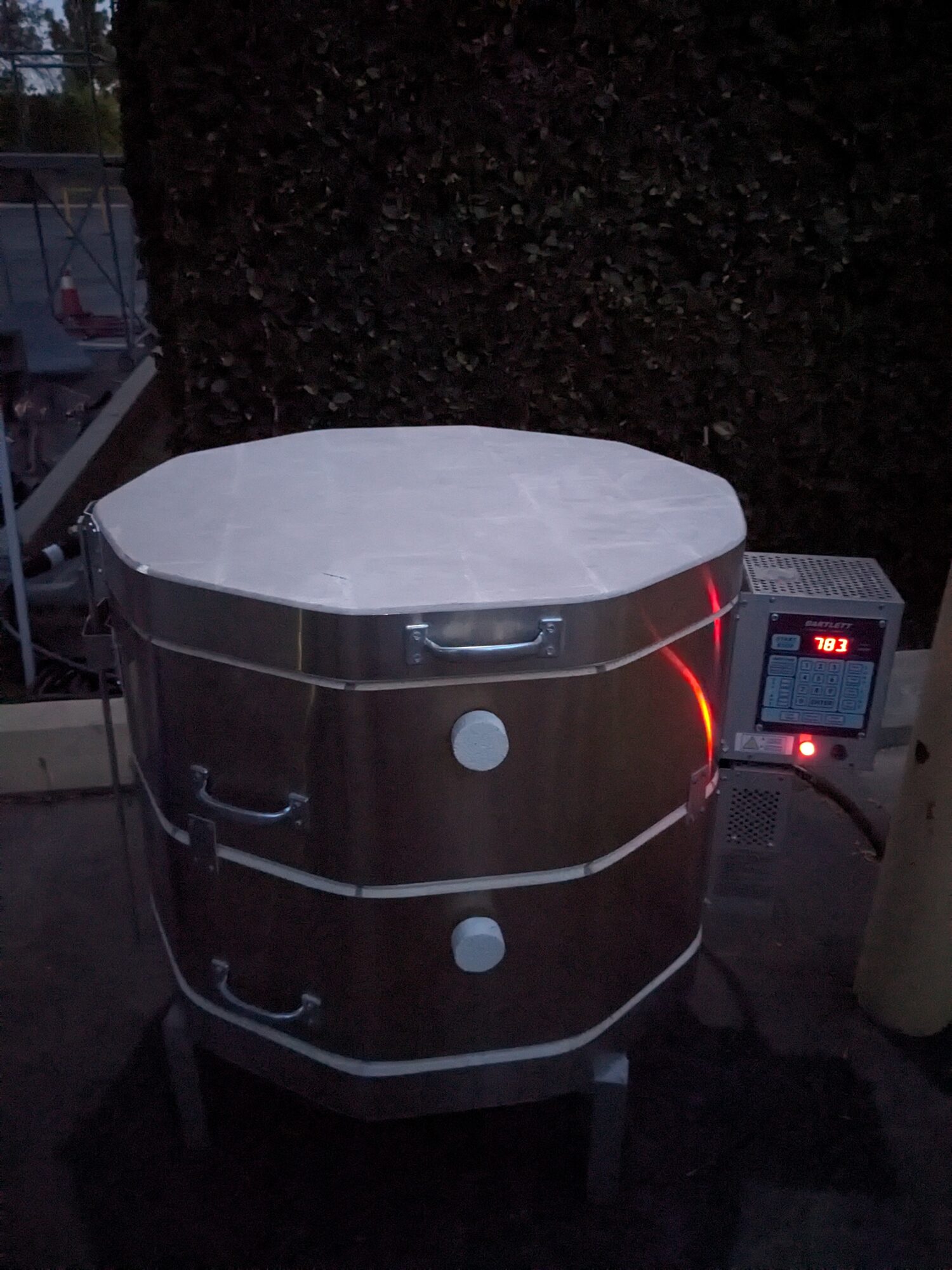
Left: a load on the shelf, one tile already cracked. Right: partway up the ramp.
Results
Both runs came out and got laid out on labelled mats, 1A through 5A. Photographs are like notebooks, nice to have clear evidence if you want it later.
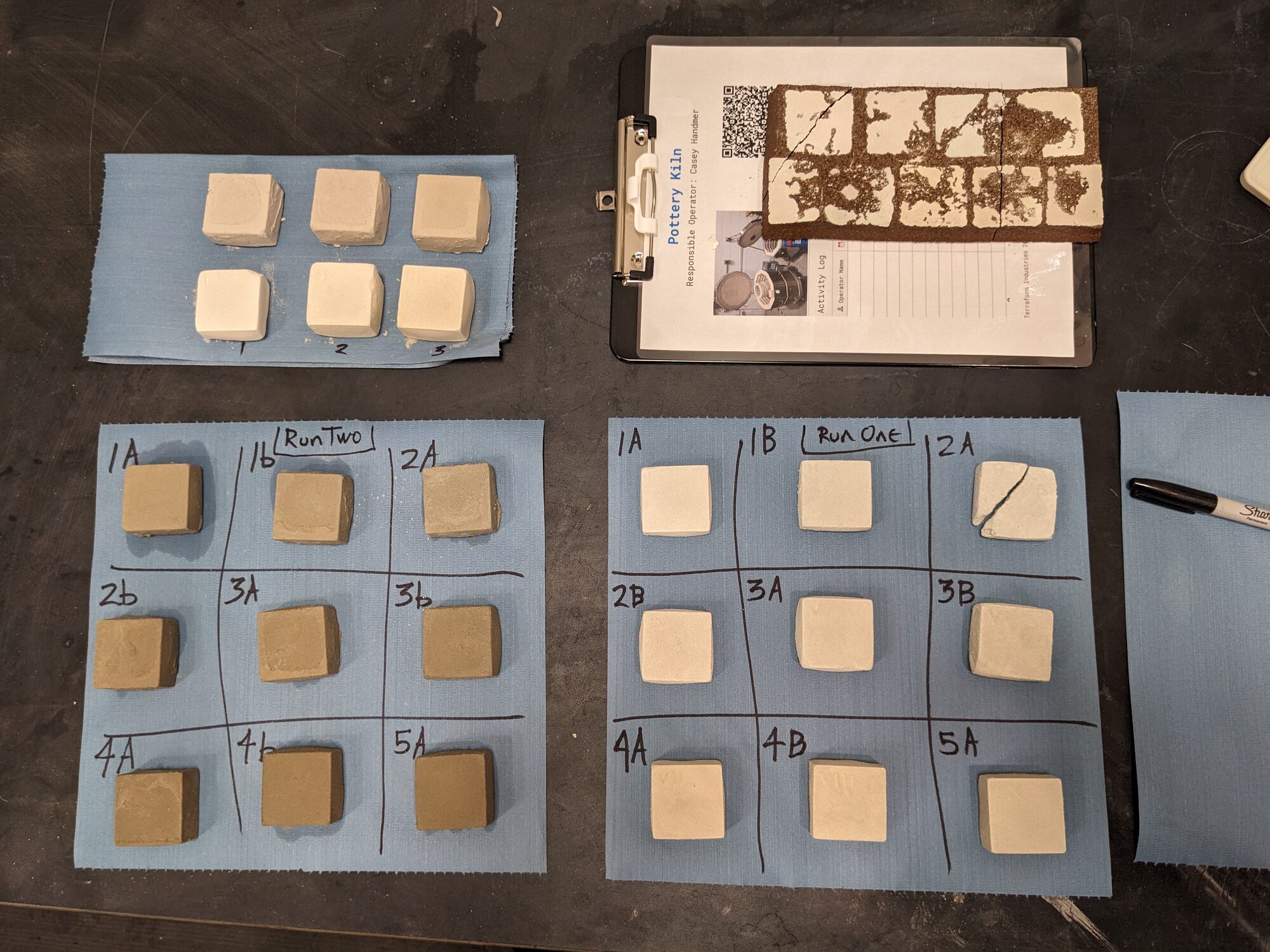
The two runs side by side. 2A in Run One split.
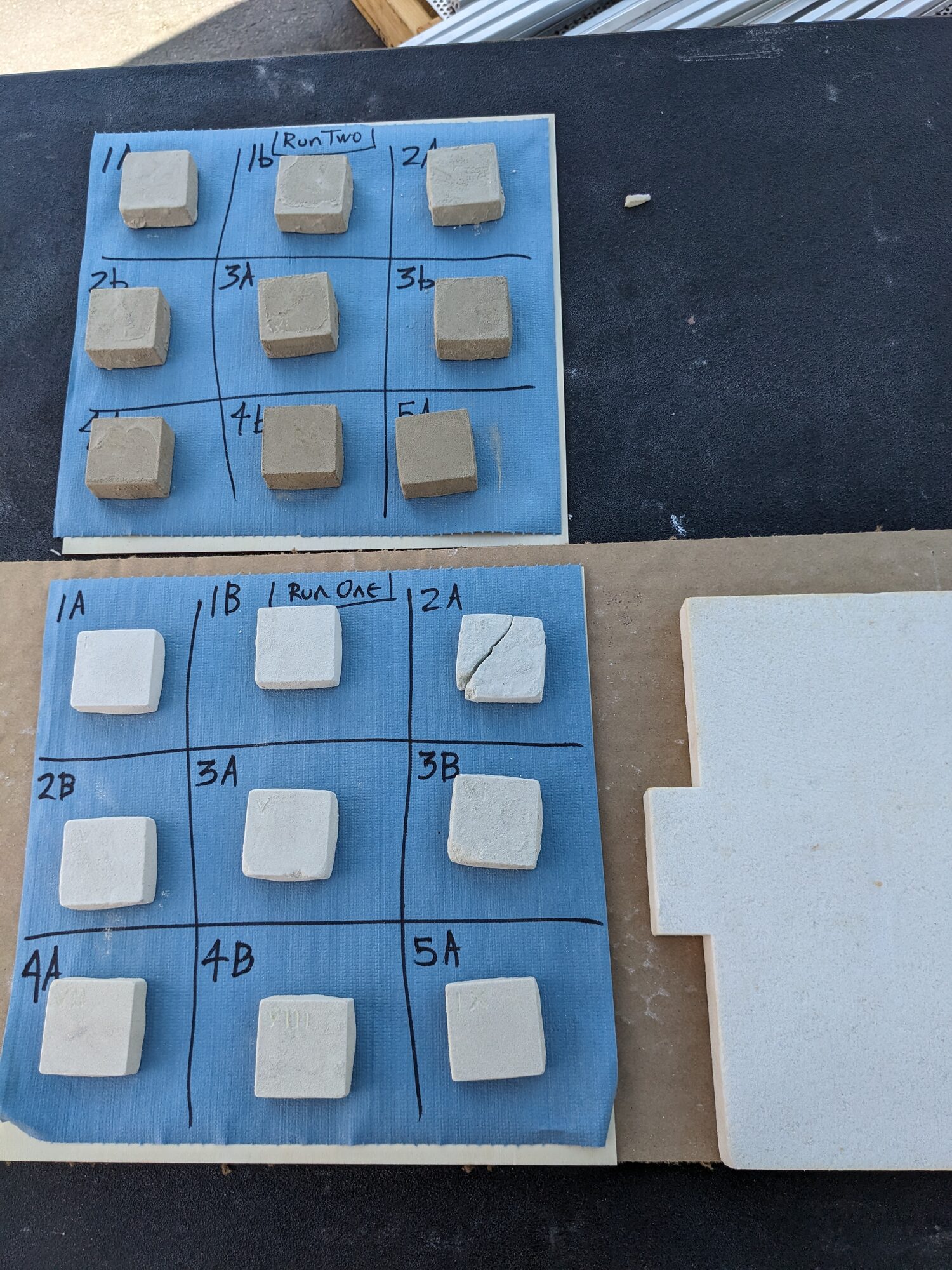
Same tiles, better light.
Compression testing
Dawson's rig: an aluminum extrusion frame with a screw press over a small platen. Tiles went in whole and came out in pieces.
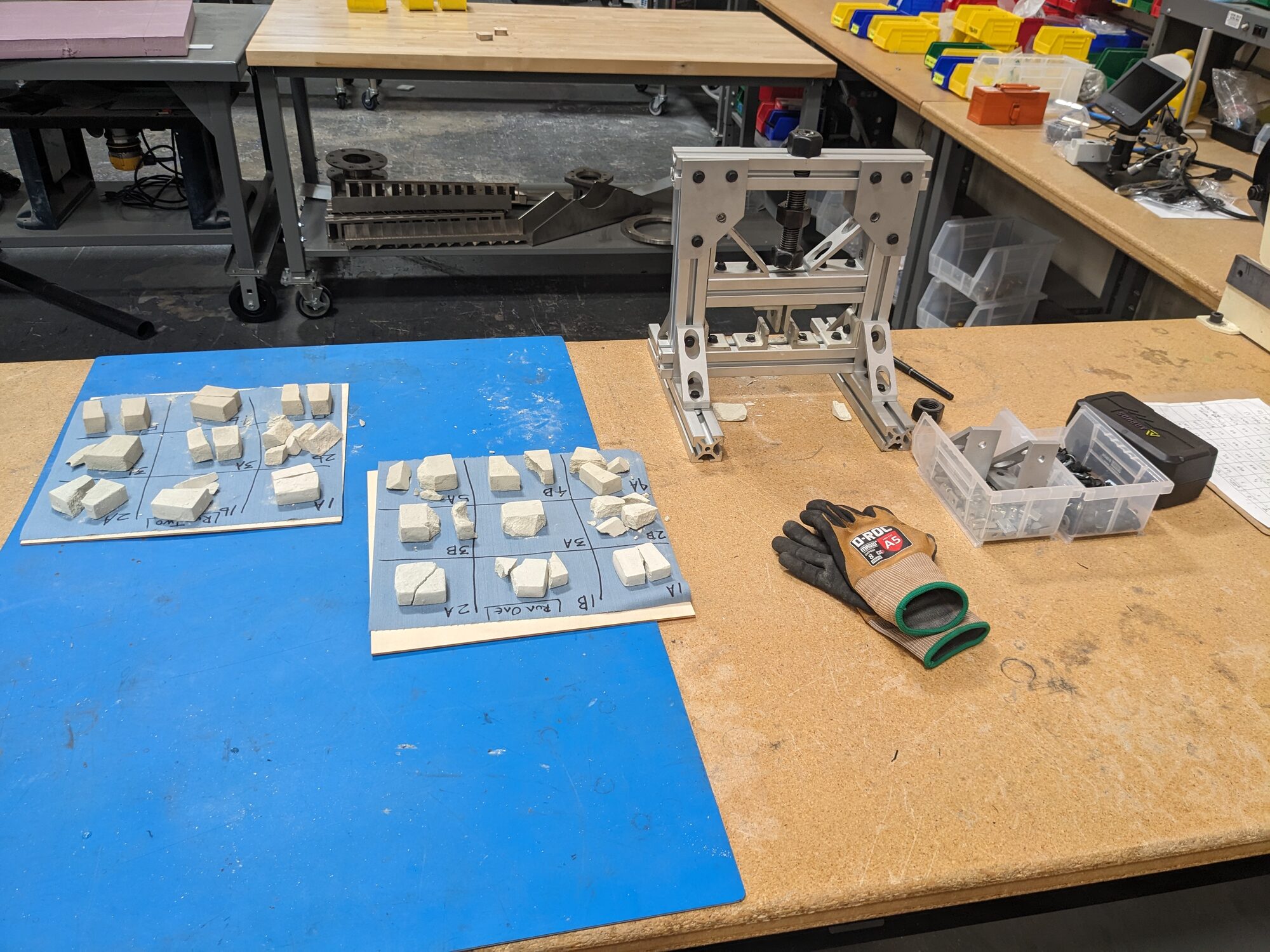
After testing. Every tile in both grids broken, sorted back into its cell.
What went wrong
One tile cracked in demolding, basically disqualifying itself, we would need to handle the blocks green, and they would be large and heavy.
What went right
- Ice cube trays worked. Nine consistent test coupons per run for the price of a tray, with no tooling lead time.
- 24 hours from plan to materials on hand, which is what made the fast answer possible.
Role
I devised the test plan, and ran casting and firing. Dawson approved the approach and designed and built the compression test rig.
Notes
- Timeline: prep 19 May 2025, casting 24 May, firing 25–27 May, compression testing 1 June 2025.
- Outcome: [Success! But we didn't know for sure until all the full size blocks were assembled and the calciner tested]