Cyclonic characterization
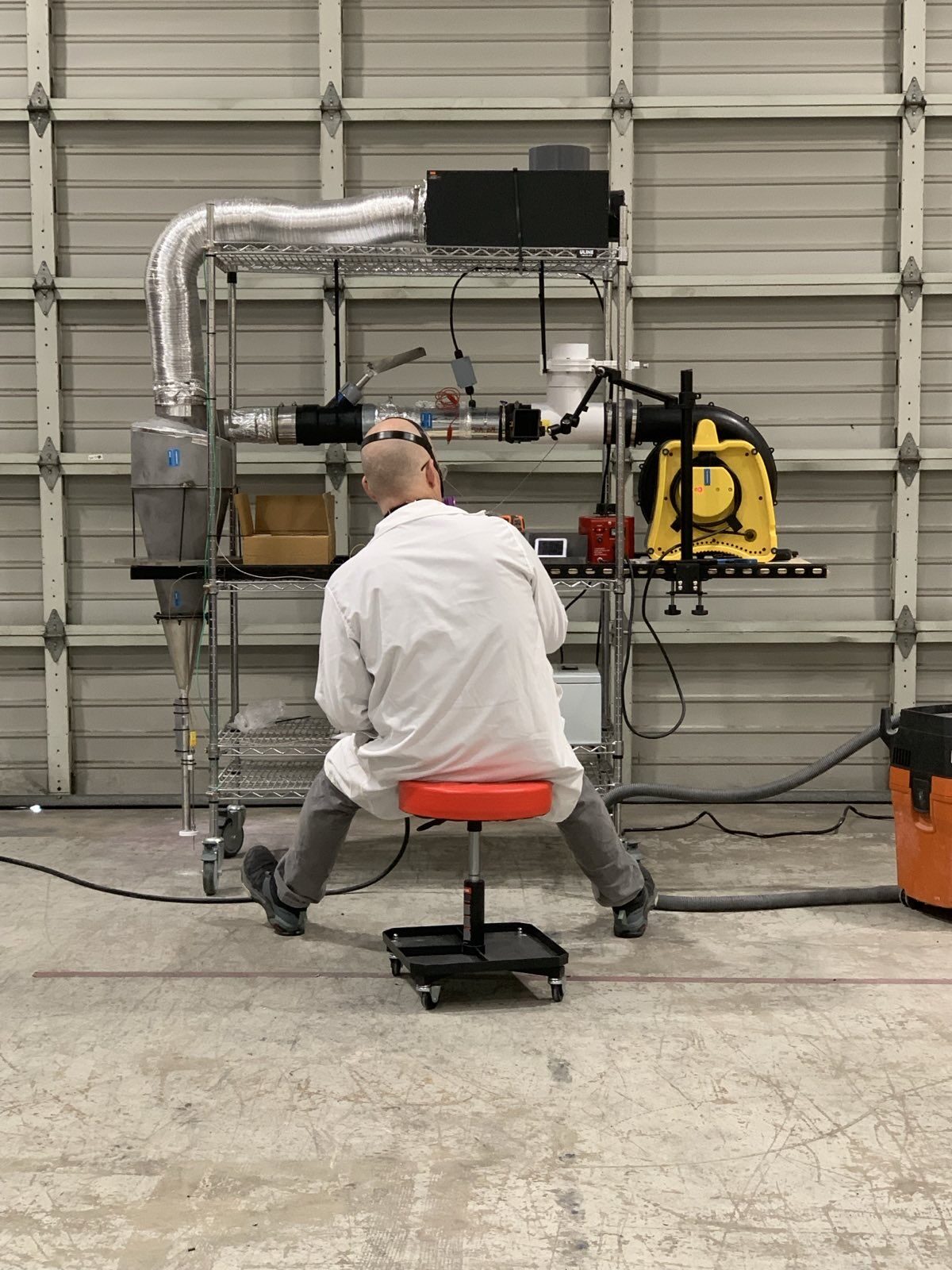
My first project at Terraform Industries (Feb 2025). The task — build a working cyclone. We needed to understand in a measurable way how cyclones perform in the real world, the boundaries and the control points.
Four goals, with cascading dependence:
- Build a functional cyclone. Built first as an open system, get all the parts working together.
- Determine sorbent latency. How long sorbent(CaCO3) spends inside the cyclone before it drops out at different dust sizes, from very fine to sand.
- Measure particle size capture. Which size fractions the cyclone catches, and which blow through.
- Test latency against heat transfer delta. How residence time relates to the heat transferred across the cycle.
The rig
I was tasked with the fastest possible path to a usable prototype cyclone.
Cyclone, ducting, blower, and collection, all on one wire cart. The rig rolls out to the parking lot, runs, and rolls back in — a test cycle is minutes, not a teardown.
Most of the parts were around, pieced it together without any procurement. Started earning my rep as a bit of a scavenger. Reuse!
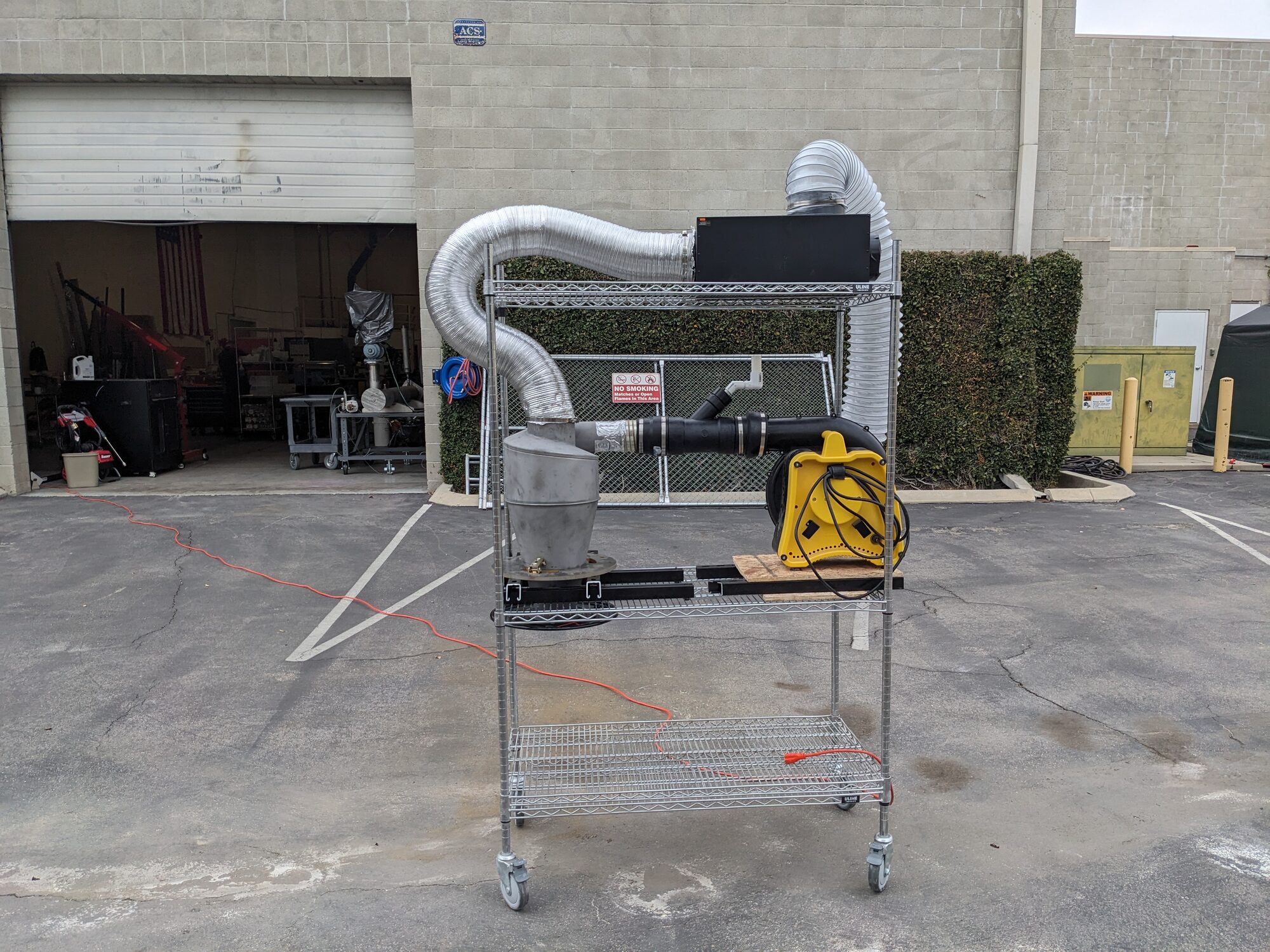
Cart-mounted configuration — cyclone, ducting, and blower on one frame. Wheels!
Setup and sampling
Runs staged in the shop bay. Sampling stayed deliberately low-tech: tared jars, a sieve stack, a bench scale. We weighed and logged the samples by hand. Used video to capture time delta data.
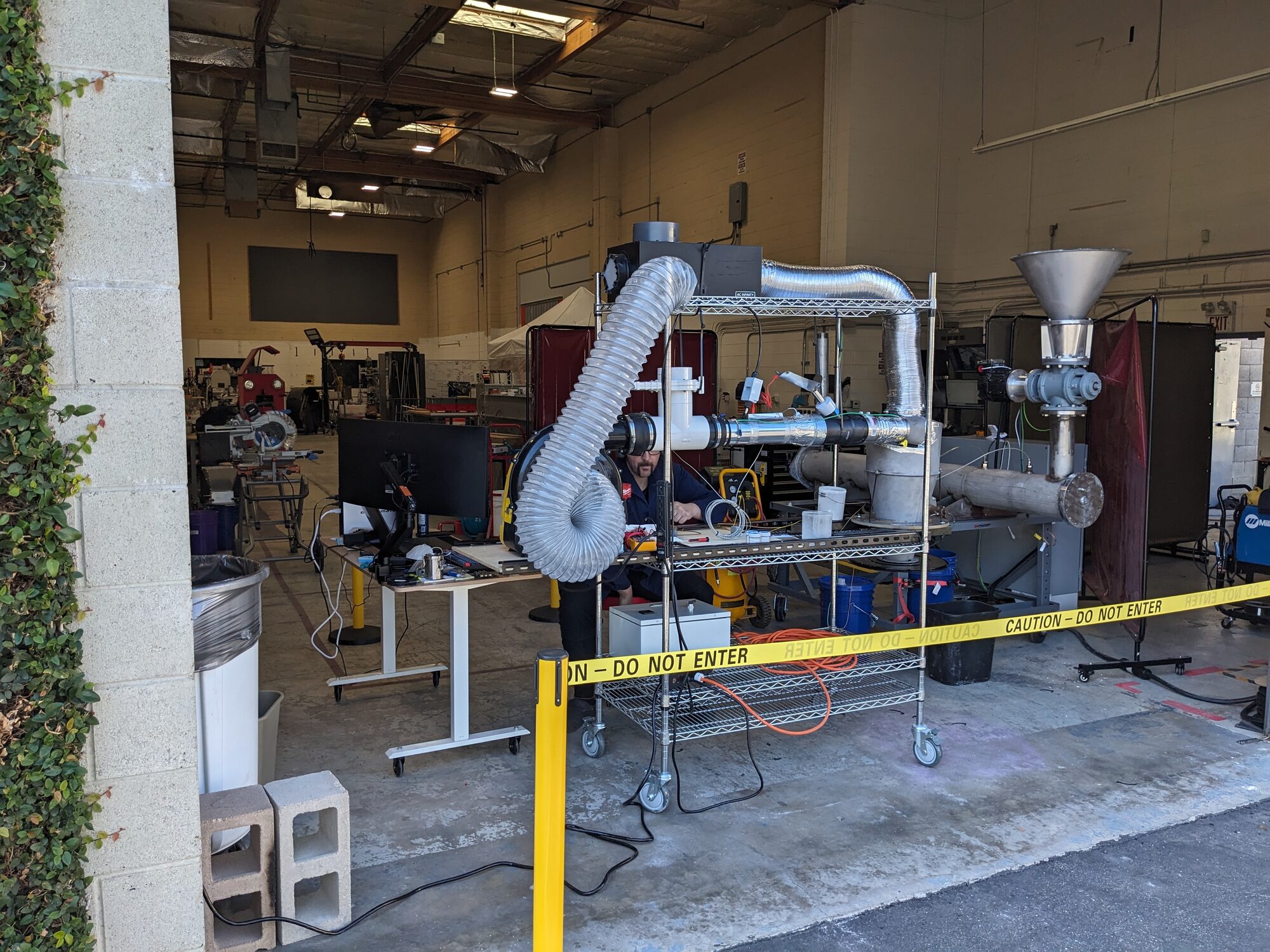
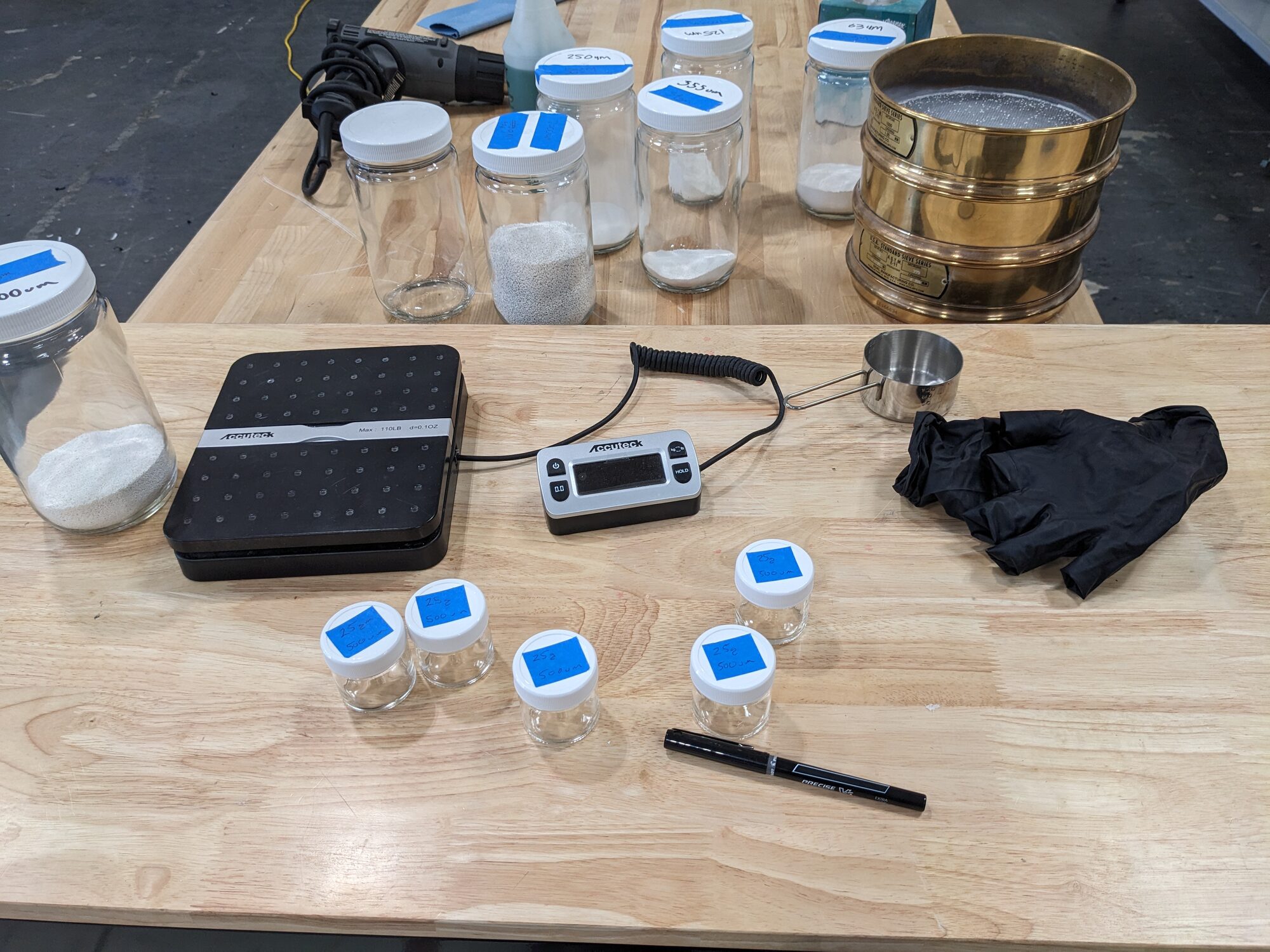
Left: staged in the shop bay. Right: sample prep — tared jars, sieve stack, bench scale.
Cone
The cone is where separation happens. The taper drives the velocity gradient that throws particles to the wall and walks them down to collection. We learned that for the particle size we were targeting (50-100um) more cone was needed so I crafted an extension, then later a long down tube to lessen turbulence during sample taking.
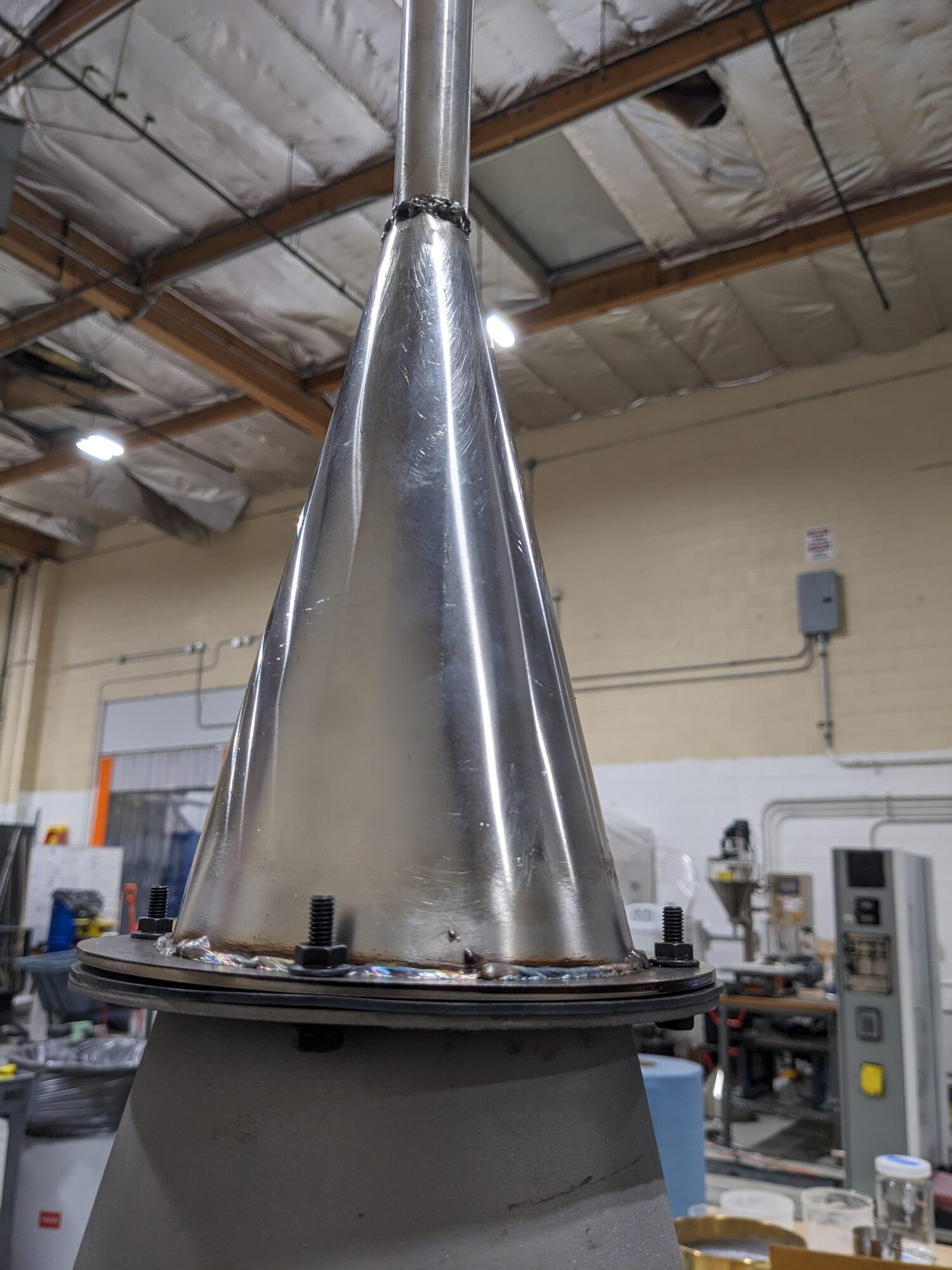
Cone and flange interface.
Notes
- Status: build complete, characterization complete, green light to proceed
- Results: separation was good when tuned right(!), heat delta was not great, but measurable
- Insight: Dust impacted air quality quickly, filtration and air quality sensor were added early on.
- Insight: cyclonic geometry is very specific to air speed, I added a sanitary gate for manual diversion, Jo added a variac, it took both to get it into functional zone.