Developing alumina rapid casting process
Ongoing development of a rapid casting process for alumina, a high temperature ceramic.
The latest prototype for the Calciner required an alumina heat deflector. The design meant that a standard multipart mold would likely take days to cast and cure. I developed a method for printing destructive molds (destroyed when demolded). The demolding was originally developed with heat gun mold removal from cast intended, later when more complex and delicate parts were needed in quickly, the lead engineer elected to burn off the mold in a kiln. I had mixed feelings about that as it was a dirty process, but did produce excellent detailed alumina parts.
First parts
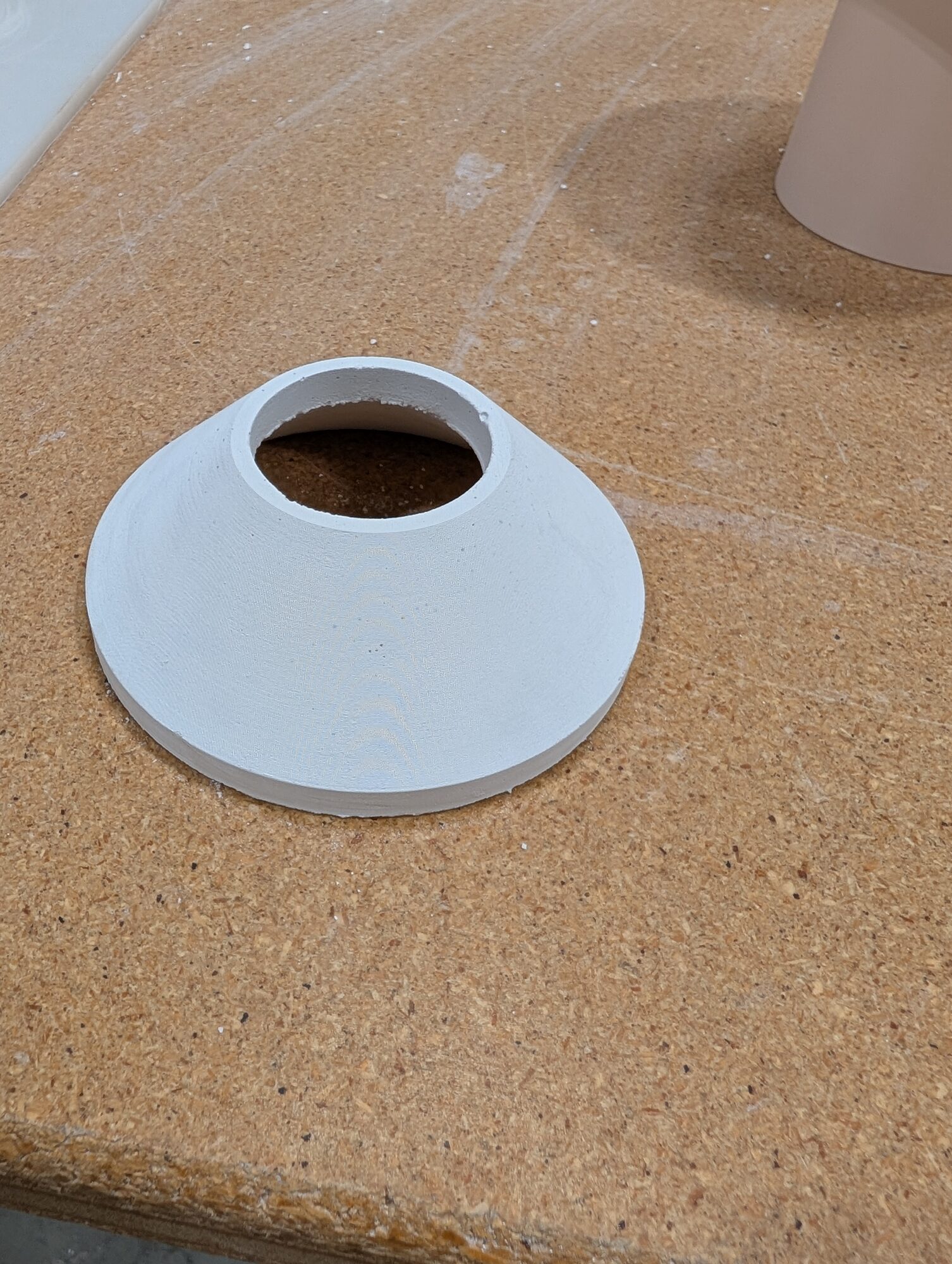
This part went from CAD to fired and ready to use in less than 48 hours
Burnout
The mold is printed, the part is cast into it, and the mold is burned out in the kiln rather than pulled off — which is what makes the geometry cheap. It also means every mold is consumed. Parts with simpler geometry can be demolded with a heat gun to avoid a dirty burnoff.
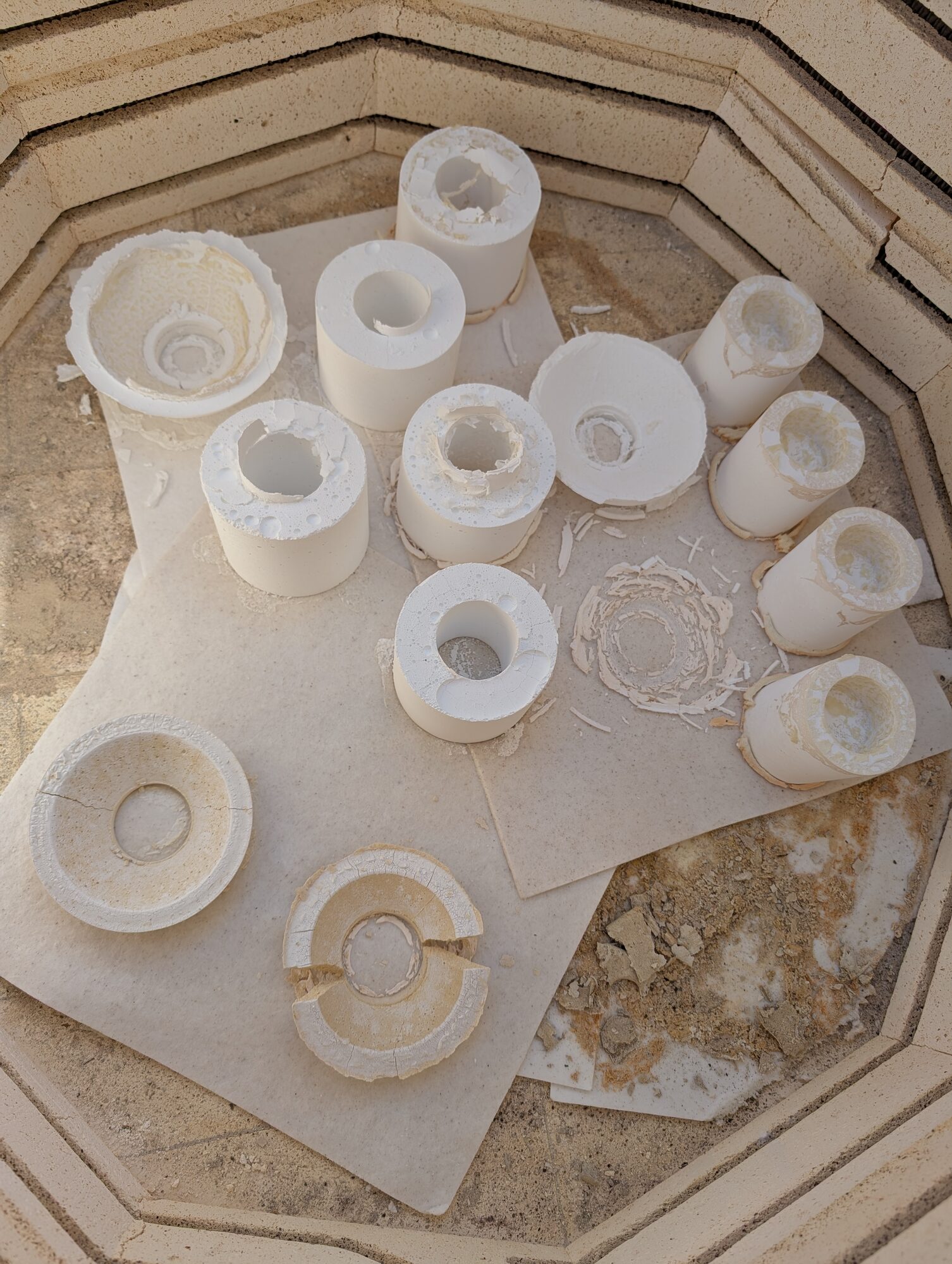
A batch in the kiln.
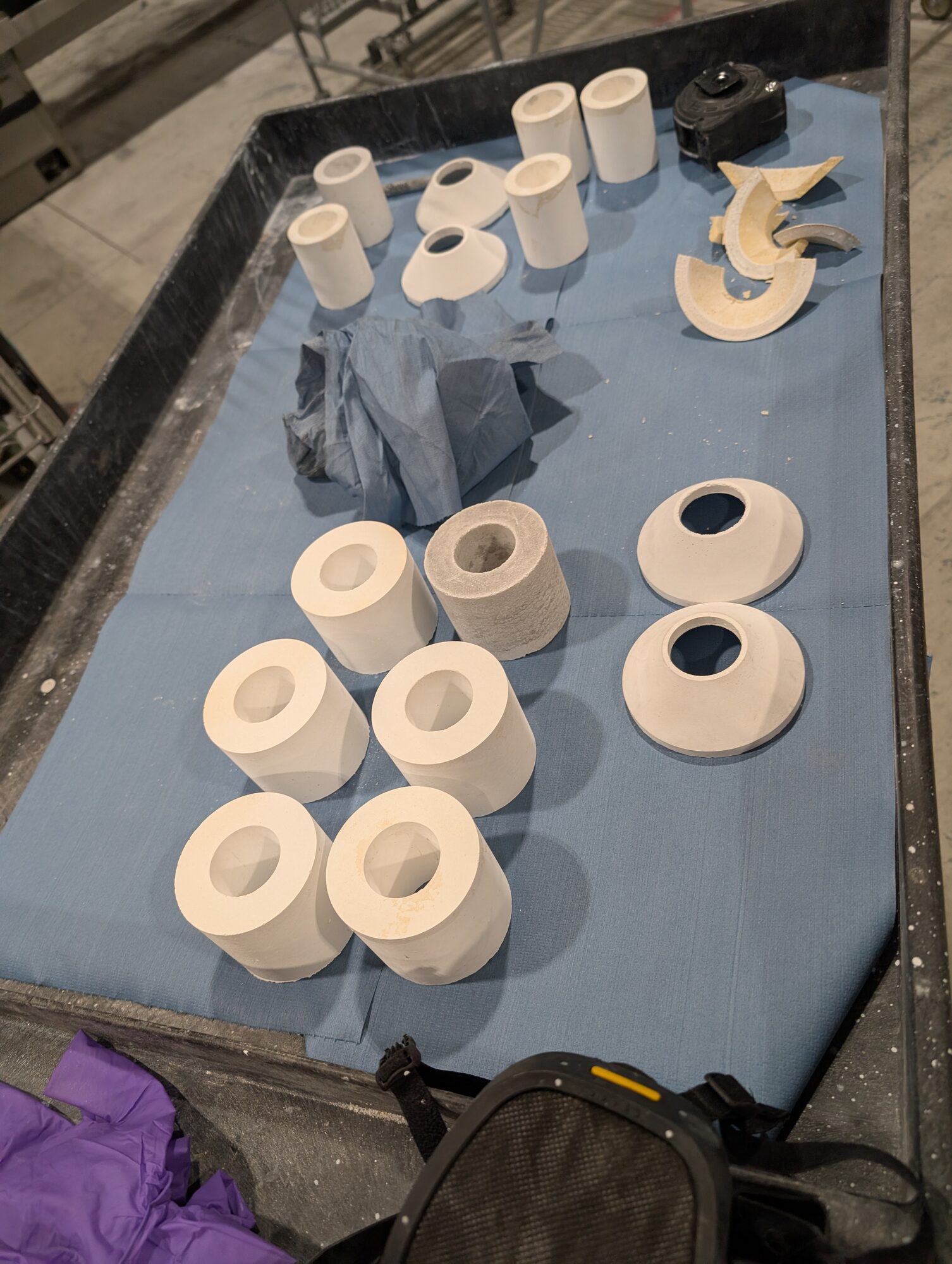
Out and sorted. Different printing materials tested, all worked, one with some coloration, similar detail capture.
Printed molds
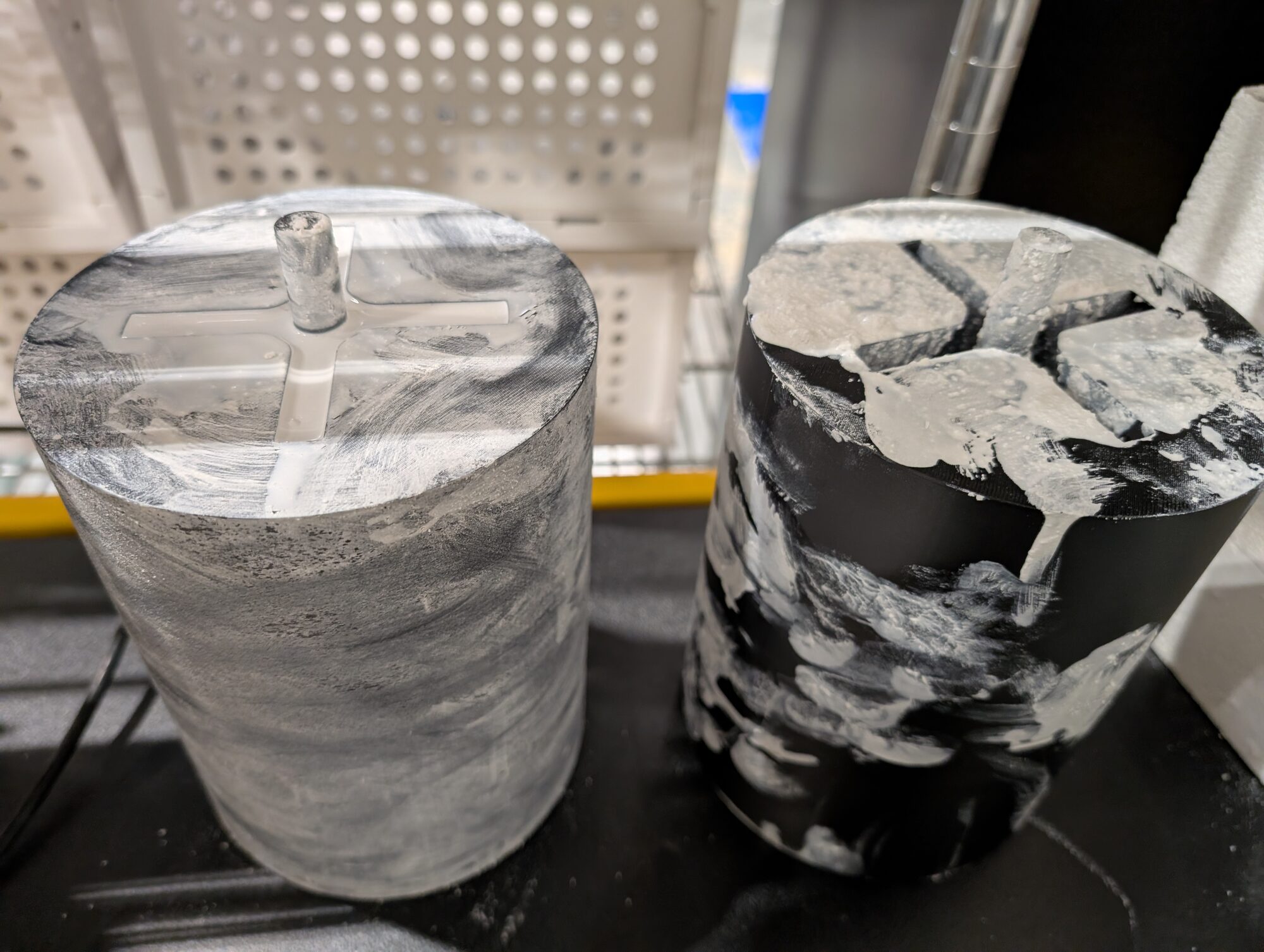
Two mold bodies with the internal web and center pin in place. Zeroing in on the displacement to mix ratio. Managed to get down to ~10% over mix safety cushion.
Where it broke
Alumina parts that were taller required tight precision around vibration with the alumina or the silt would settle out and crack on edges on the bottom plane. We also worked as close to the drying window as possible which lead to side cracking as we tuned how long to cold cure and how long to candle. At least partial heat gun demolding reduced cold cure time by about half a day typically.
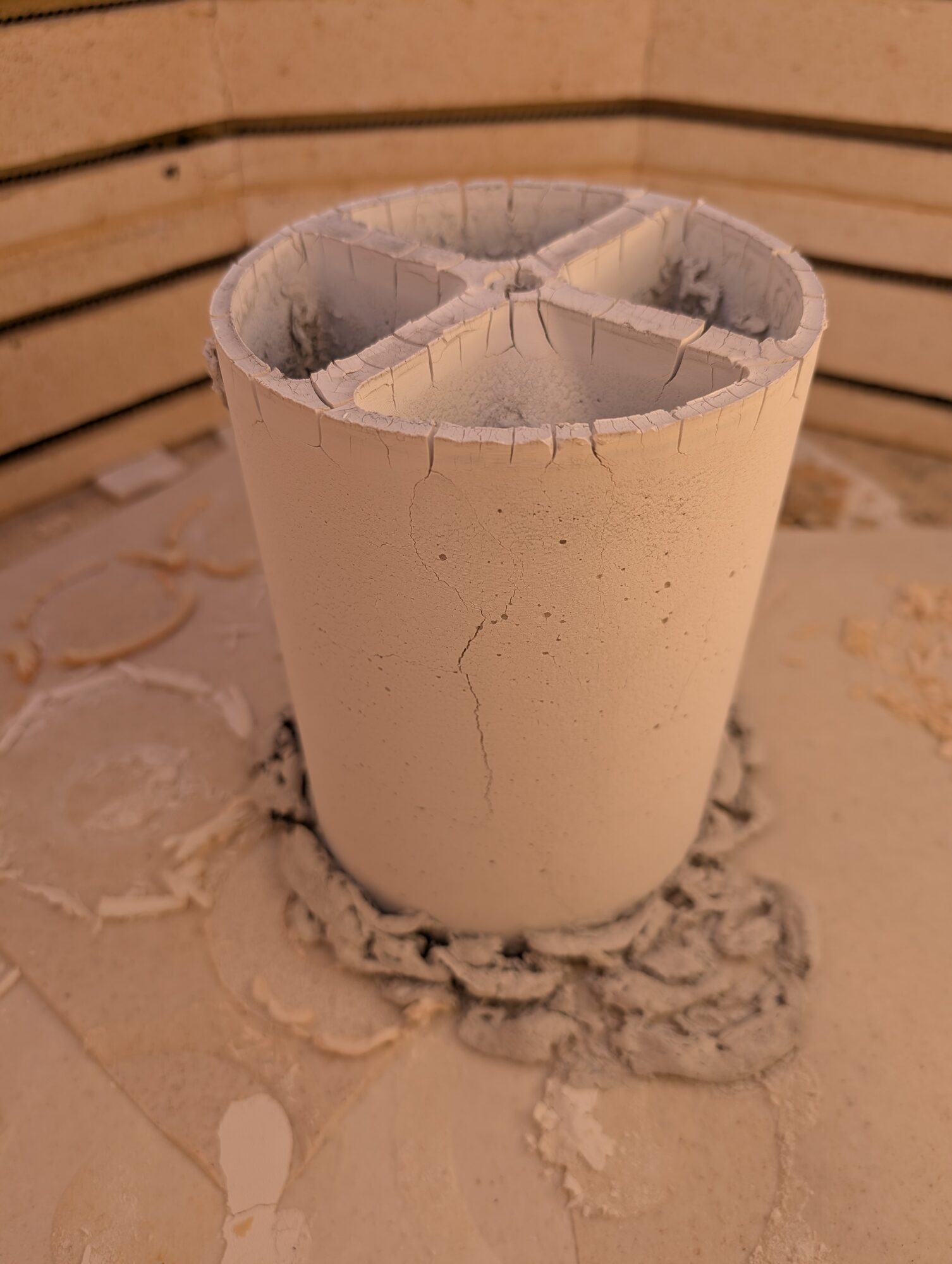
Cracked at the rim and through the wall.
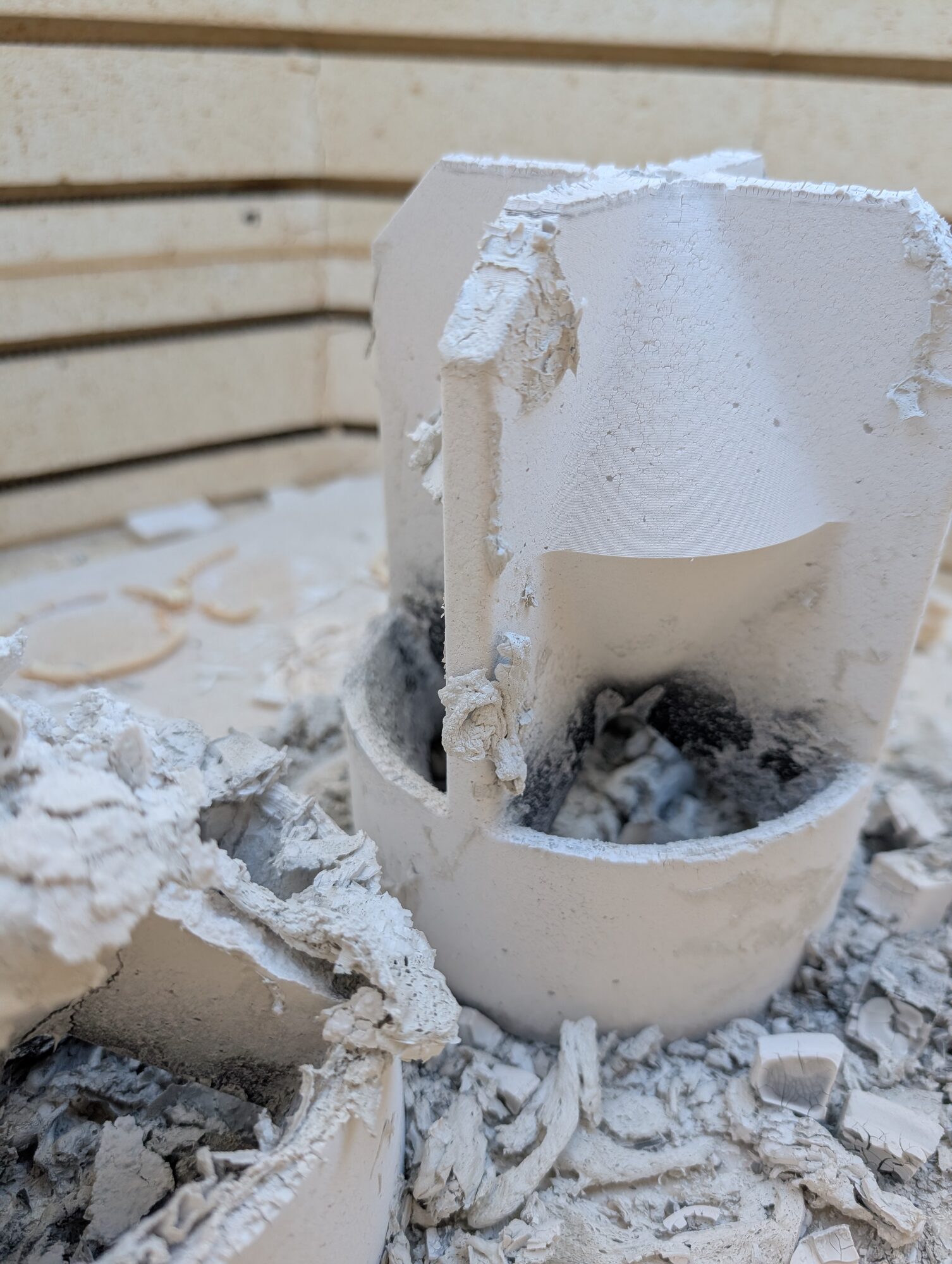
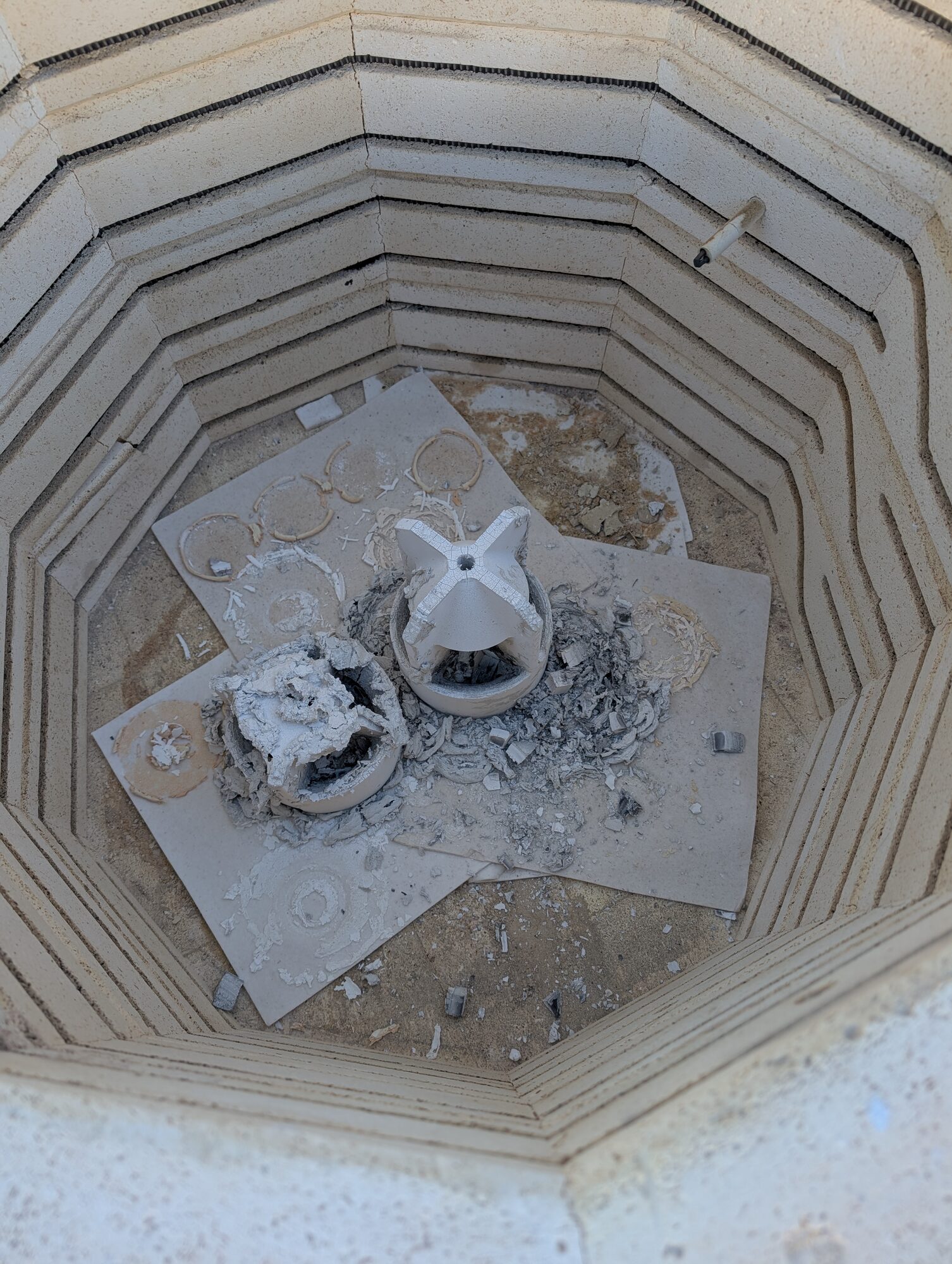
What came out of the December firings.
Alumina is not an easy casting material, and certainly not one that wants to be handled quickly. For prototyping it was about finding the balance. We're not here for pretty, we're here for data, understanding and process refinement.
What worked
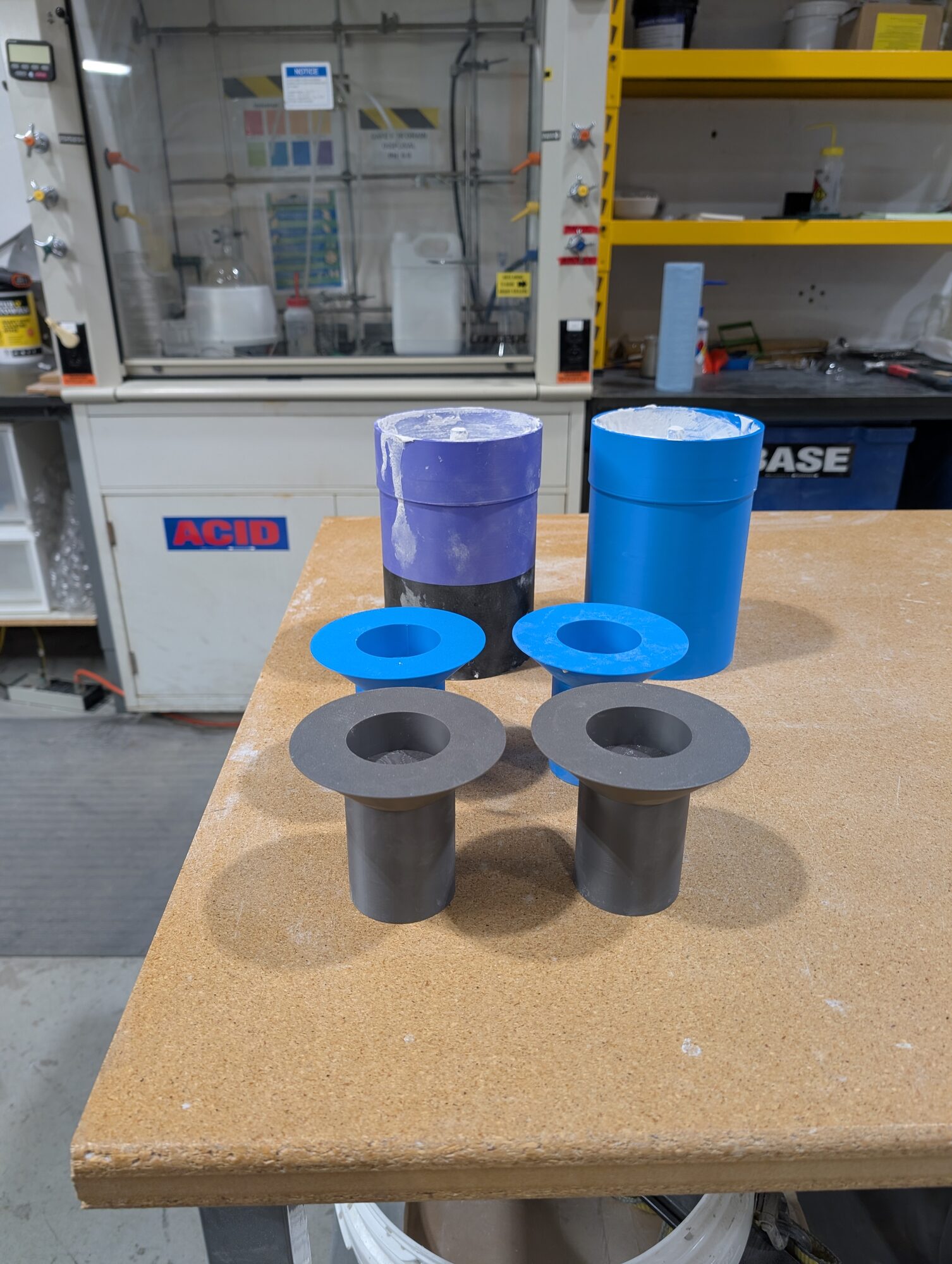
By January alumina part casting was pretty much settled and I trained a junior engineer in the process so that I could move on to the dust filtration test campaign.
What went wrong
--Nothing exceptional or unexpected There were things that broke and things that didn't work, but the process was refined into a procedure that was fast and consistently repeatable.
What went right
--It worked We couldn't find any evidence of anyone else doing this so maybe we were the first to rapid prototype high temperature kiln parts? Certainly a promising process.
Role
Lead prototype technician: I was responsible for developing and refining the entire process. As well I converted the old chem lab into the new larger isolated casting area w/fume hood.
Notes
- Status: functional process implemented.
- Timeline: first parts 2 November 2025, first kiln batches 6 November, printed. molds and web parts 11–13 December, working molds and parts 8 January 2026.
- Outcome: success with long term process use expected.